
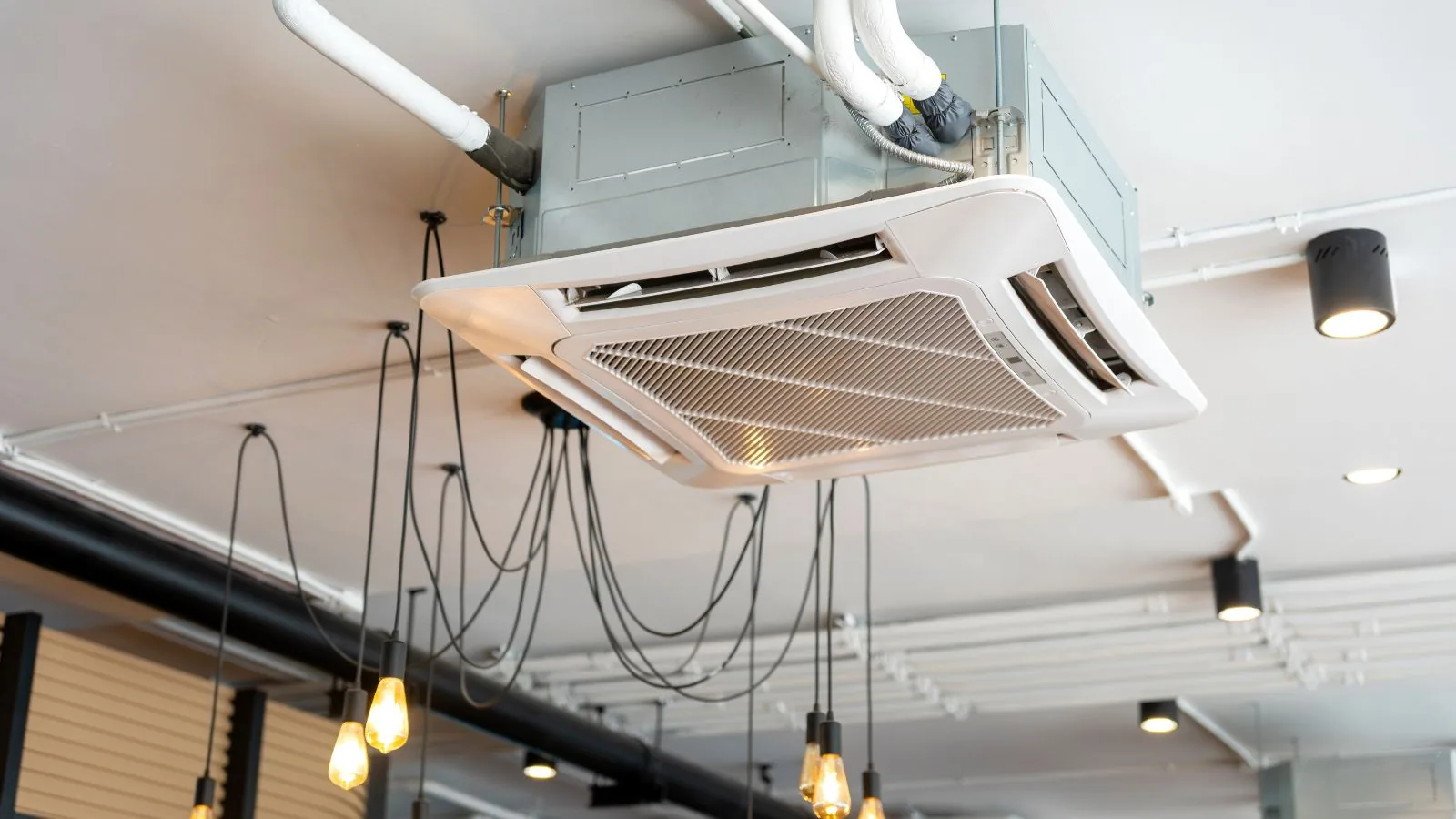
An air conditioner pulls water out of the air all summer, and that water has to go somewhere. When the condensate line clogs or the drain pan overflows, the water ends up in a ceiling, a closet or a floor. If you see staining near an air handler, turn off the AC unit and call the 24/7 line at (833) 521-1033.
AC leak water damage is the wetting of a building by condensate from an air conditioner or heat pump. It is usually clean water, but it is slow and recurrent, which makes mold a bigger concern than with a one-time pipe break.
SourcesWhere AC water ends up
Ceiling below an attic unit
Condensate drips through insulation and shows as a ring stain. See ceiling water damage repair.
Closet air handler
Water soaks carpet, baseboard and the drywall behind a closet that is hard to see.
Mini-split line
A kinked or clogged drain hose drips behind the indoor unit and into the wall.
Basement or utility room
Water pools near the unit and wicks into stored items and walls.
Callers describe an HVAC condensate line backing up into a hardwood floor and an AC unit leak that left mold in a closet. Both cases come from the same slow process, which is why the first step is to find out how long the water has been getting out.
BehaviorWhy AC leaks are tricky
Condensate leaks tend to be small and continuous. A damp closet carpet or a stain that grows slowly in summer is more typical than a sudden flood.
That slow pace is the hazard. Materials that stay damp for weeks are the ones that grow mold, so a leak that looks minor can need real drying. When someone only notices a musty odor, moisture is often already in the wall.
Stain near the AC unit?
Turn off the unit and call. The phone line is open 24/7 and we will explain what a moisture check involves.
What the cleanup involves
Stop the unit
The AC is switched off so it does not keep producing water.
Find the extent
A moisture meter and thermal camera show how far the water traveled.
Dry
Air movers and dehumidifiers dry the affected area, and wet insulation is removed.
Repair
Drywall, baseboard or flooring are replaced if they did not dry in place.
The repair of the AC drain itself belongs to an HVAC technician. Restoration deals with the wet building materials. If mold has started, the next step is covered on mold remediation.
DecisionDry in place or replace
| Material | Often dried in place | Often replaced |
|---|---|---|
| Carpet | If wet briefly and clean | Pad and carpet after long exposure |
| Hardwood and laminate | With drying mats if caught early | Boards that cupped or swelled |
| Drywall | Small areas with access holes | Soft or stained board |
| Insulation | Rarely | Usually removed if wet |
AC leaks across Roosevelt, Freeport and Oceanside
On jobs involving an AC leak, crews serve Roosevelt along Nassau Road and the Hempstead-Babylon Turnpike and the neighboring towns of Freeport and Oceanside. Air conditioners run hard through the summer, so drain lines and pans should be checked every season.
If you rent, notify your landlord and document the damage. A building's HVAC may be the landlord's responsibility, and written notice helps.
PreventionHow to stop a repeat
Most condensate leaks come back unless the cause is fixed. A technician can clear the drain line, check that the drain pan is level and not rusted through and confirm that a float switch shuts the unit off when the line backs up.
Between visits, look at the area around an indoor unit once a month during cooling season. A damp spot on the floor, a drip stain on a ceiling or a musty smell are all early warnings, and catching them early keeps the repair small.
- Ask your HVAC technician to flush the condensate line before the cooling season starts.
- Check that the line slopes away from the unit and is not kinked or crushed.
- Replace a cracked or corroded drain pan.
- Install a float switch or a second drain pan where a leak would reach finished space.
- Keep the area around the air handler clear so stains and drips are visible.
Safety first around a leaking air handler
- Turn off the air conditioner at the thermostat and the breaker before touching a wet unit.
- Do not stand in water near the air handler or its wiring.
- Place a bucket under active drips and photograph the stains.
- Call an HVAC technician to clear the drain line.
Our drying and cleanup practice follows the ANSI/IICRC S500 standard for water damage restoration.
SafetySafety first with a leaking appliance
- Unplug the appliance only if the cord and outlet are dry.
- Close the appliance shutoff valve or the main valve.
- Do not run the appliance again until a technician checks it.
- Photograph the leak and the damaged floor before cleanup.
Our drying and cleanup practice follows the ANSI/IICRC S500 standard for water damage restoration.
Cost factorsWhat sets the cost
The cost follows how long the leak ran, which materials are wet, whether growth is present, the drying days and the rebuild. Insurance often treats a slow condensate leak as maintenance rather than a sudden event, so check your policy or ask your insurer.
Want your real number for an AC leak? Call (833) 521-1033 and we will explain scope and price for an AC leak before work starts.
Common Questions
Can you fix my AC drain line?
No. An HVAC technician clears or replaces the drain line. We dry and repair the water damage it caused.
Is AC condensate water dangerous?
It is usually clean at first, but it can pick up debris and become a mold source if it sits. The key risk is how long the area stays damp.
Should I turn the AC off?
Yes, if it is leaking. Turn it off and call an HVAC technician for the drain while we handle drying.
Will insurance cover an AC leak?
Sudden failures may be covered, while slow condensate leaks are often treated as maintenance. Ask your insurer.
How do I know if there is mold in the closet?
A musty smell, discoloration on the wall or carpet and damp materials all point to moisture. A moisture check and an assessment can confirm it.