
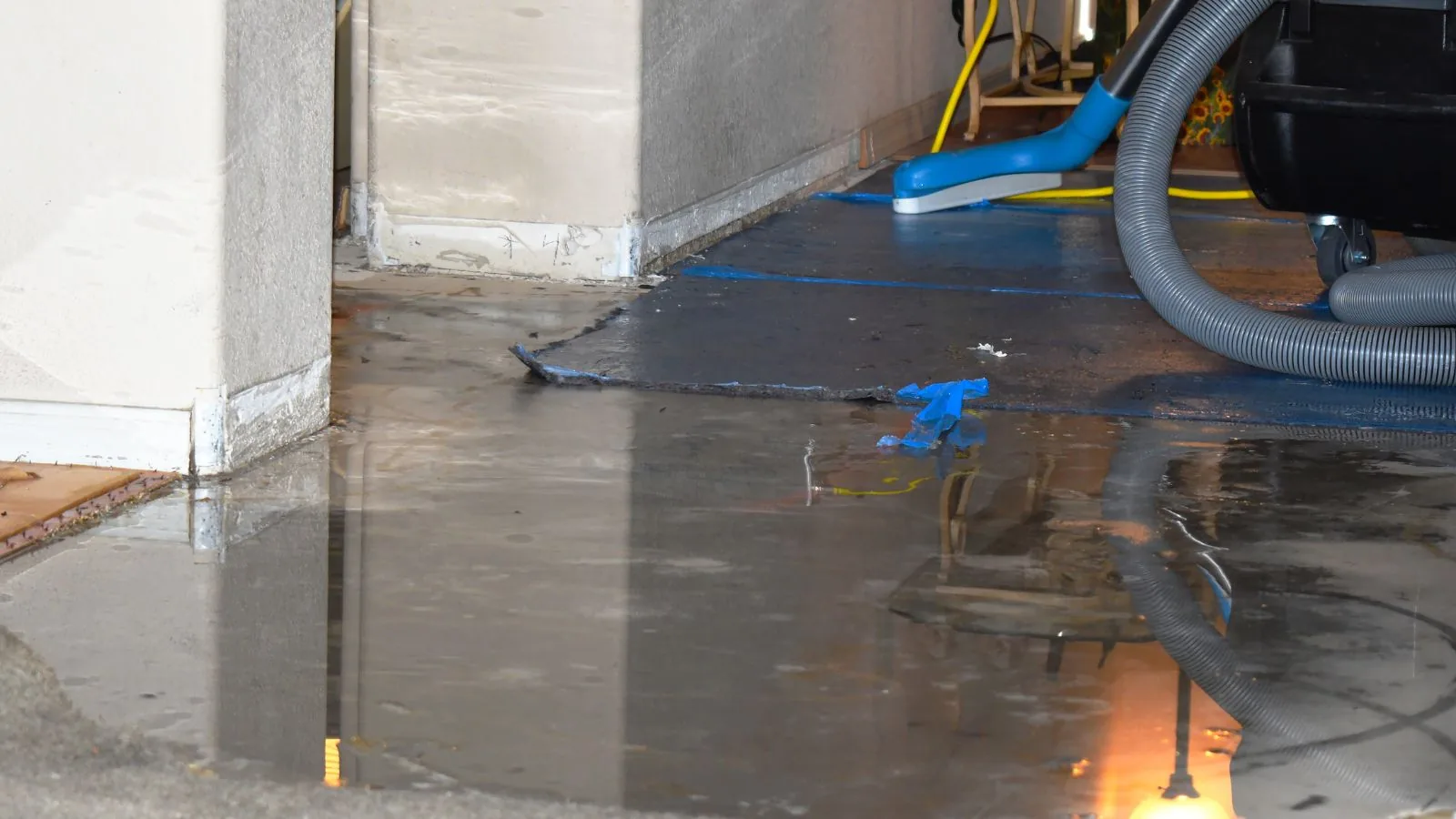
Standing water is an emergency because it keeps moving into drywall, framing and subfloors for as long as it sits. If water is on your floor right now, call the 24/7 line at (833) 521-1033 and describe what you see. While you wait, stop the source if you can reach the shut-off safely, keep people and pets out of the water, and lift valuables off the floor.
Water extraction is the removal of standing and pooled water with submersible pumps, portable extraction units and weighted wands, followed by drying. It is the first physical step on most losses in Roosevelt, and it is the step that decides how much material can still be saved.
Act firstWhen standing water is an emergency
Not every wet floor needs a pump, but several situations should not wait for morning. Water that is more than a film deep, water spreading toward carpet or a finished wall, and water that touches anything electrical all need a fast decision.
Callers describe these the same way: a laundry room with ankle-deep water, a basement that took on water overnight, a bathroom leak that dropped part of a ceiling, or a house where water has been sitting for three or four days. The last case matters most, because wet drywall and padding that stay damp for days are the materials most likely to grow mold.
If water is near outlets, a panel or plugged-in appliances, stay out of the room. Cut power only if you can reach the panel while standing on dry ground, and call the utility or 911 for any electrical or gas risk before you call us.
How extraction works, step by step
- Read the waterThe crew checks depth, spread and the likely category of the water. Clean supply-line water and a backed up drain are handled very differently.
- Protect what can be protectedFurniture is lifted or blocked, small contents are moved, and the safest route in and out is set before equipment goes in.
- Pump the bulk waterSubmersible pumps move deep water out through hoses. Where the depth is shallow, portable extractors and wet vacuums take over.
- Extract from soft materialsWeighted extraction wands pull water from carpet and padding. Padding that cannot be dried in place is usually removed.
- Check hidden moistureMoisture meters and thermal imaging look behind baseboards and into wall cavities, because the surface can look dry while the framing is not.
- Hand off to dryingOnce the standing water is gone, air movers and dehumidifiers take over. That stage is covered under structural drying and dehumidification.
Pump-out or wand extraction: matching the method to the loss
| Situation | Method | Why it fits |
|---|---|---|
| Pooled water deeper than an inch across a room | Submersible pump, then wand extraction | The pump clears volume quickly so the wand can work on what soaked in |
| Soaked carpet and pad | Weighted extractor, pad removal if needed | Padding holds water long after the carpet surface feels drier |
| Thin film on tile, vinyl or sealed concrete | Wet vacuum or squeegee extraction | A light pass is enough when the water has not wicked into anything |
| Water inside a wall cavity | Baseboard removal, small access holes, drying system | Water travels up and across framing, so the cavity is opened rather than guessed at |
| Water from a drain or sewer line | Protective gear, containment and sanitizing | Contaminated water needs a stricter process, see sewage backup cleanup |
Water on the floor right now?
The 24/7 line is answered any hour. Tell us what you see and we will talk through the safest next move.
What water extraction does not cover
Extraction removes water that is inside a building. It does not pump a yard, a pool or a street, and callers sometimes ask for that. Those are different jobs that we do not take on under this service.
It also does not stop water from coming back. A wet basement after heavy rain may need drainage or waterproofing work from a different trade once the cleanup is done, and a good restoration company will say so plainly.
LocalExtraction near Roosevelt, Freeport and Oceanside
Roosevelt sits between the Hempstead area and Freeport, and the crews work these streets along Nassau Road and the Hempstead-Babylon Turnpike. For service in the neighboring towns, see our pages for Freeport and Oceanside.
Heavy rain can send water back up through drains. The National Weather Service recorded exactly that on June 4, 2012, when water rose from sewers and storm drains in Freeport as far north as Sunrise Highway. Water that comes up through a drain is treated as contaminated, so tell the dispatcher where it came from when you call.
Cost factorsWhat sets the cost of extraction
Water category
Clean supply water costs less to handle than gray or contaminated water, which needs protective steps.
Depth and square footage
More volume and more affected rooms mean more pump time and more equipment.
Materials soaked
Carpet, pad, hardwood and drywall each respond differently, and some must be removed.
Time standing
Water that has sat for days has soaked deeper and raises the drying and repair scope.
Insurance may respond when the water came from a sudden and accidental event, and it often does not respond to a slow leak or neglect. Flood damage is usually excluded and needs separate flood coverage, so check your policy or ask your insurer. Want your real number for standing water? Call (833) 521-1033 and we will explain the scope and price before any work starts.
Common Questions
Do you handle water extraction emergencies at night or on weekends in Roosevelt?
Yes. The phone line is answered 24 hours a day, including nights, weekends and holidays. Tell the dispatcher what you see and where the water came from, and you will get safe first steps right away.
We do not promise a fixed arrival window, because it depends on your address, the size of the loss and crew availability. We will tell you plainly what to expect when you call.
Can you pump out my yard or pool?
No. This service removes water from inside homes and businesses. Yard drainage and pool pumping are different jobs.
How long does water extraction take?
Pulling standing water out of a typical room usually takes hours, not days. Drying the structure afterward is a separate stage that takes longer, and the length depends on the materials and how deep the moisture went.
Is a household wet vacuum enough?
A wet vacuum can lift a thin film of clean water. It will not clear deeper water, soaked padding or anything that may be contaminated. Never plug a vacuum into an outlet near standing water.
Do you serve Freeport and Oceanside as well as Roosevelt?
Will my insurance pay for water extraction?
It depends on the cause and your policy. Sudden and accidental water damage is often covered and gradual leaks often are not. Photograph the damage before cleanup and ask your insurer.