
Bubbling paint, brown stains or soft spots on the wall?
Drywall is paper and gypsum, and both soak up water. A leak inside a wall may show only as a faint stain or a bubble in the paint while the cavity stays wet. Callers ask whether wet drywall can be dried or must be cut out.
Wall and drywall water damage repair is the assessment, drying and replacement of wet wall material. The goal is to save what dries and remove what does not, before mold or structural harm takes hold.
If a wall is wet or a stain is spreading, stop the source if you know it and call the 24/7 line at (833) 521-1033.
Wall soaked or stained?
Call the 24/7 line. A moisture reading shows whether water is still inside.
How we tell what can be saved
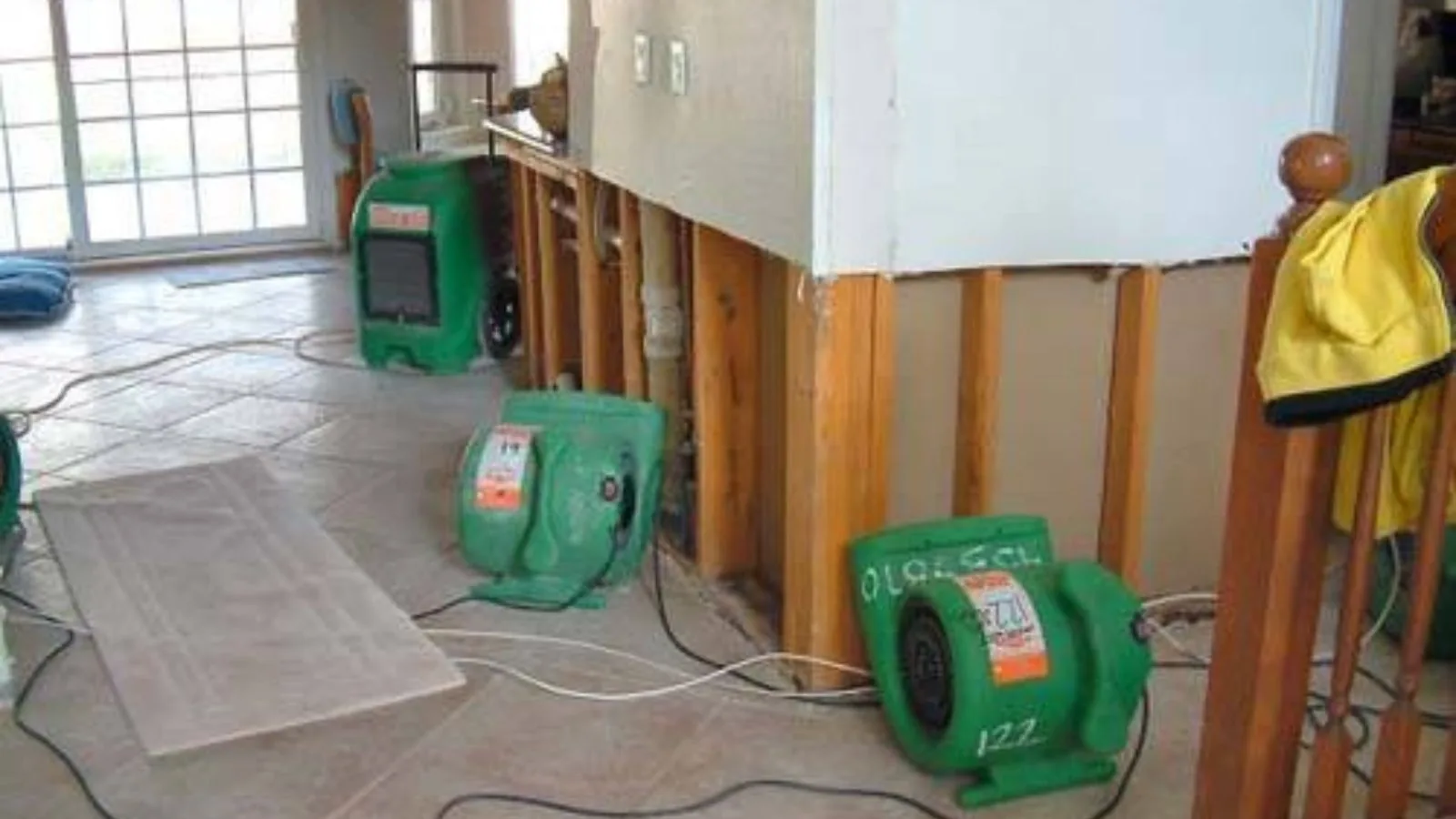
A moisture meter and a thermal camera show where a wall is wet without opening it. Clean-water leaks caught early can often be dried through small access holes.
Drywall that is soft, crumbling or stained with repeated wetting is usually replaced. Water that was contaminated or sat for days also tends to mean removal.
Dry in place
Used for clean water caught quickly, with holes and air movers pulling out moisture.
Flood cut
Drywall is cut a set height above the water line when water wicked up the wall.
Full replacement
Used for soft, contaminated or moldy sections.
Insulation removal
Wet insulation holds water and is usually pulled and replaced.
The repair process
Find and stop the source
The leak is located and shut off by the proper trade.
Open and dry
Access holes or cut sections let air reach the wall cavity.
Confirm dry
Readings must match unaffected walls before closing up.
Replace
New drywall, taping, texture and primer are put in.
Paint
The repaired section is painted to blend with the room.
Drying uses the same moisture mapping explained under structural drying and dehumidification. If the wet wall is under a ceiling leak, see ceiling water damage repair.
MaterialsPlaster, plaster-and-lath and older walls
Not every wall is drywall. Older homes may have plaster over wood lath, and plaster responds to water differently from gypsum board. It may need a different repair.
Roosevelt has houses of different ages, so we check the wall type before deciding. We do not assume what is behind the paint.
StepsWalls after a leak: what to do
- Take photos of stains and bubbles with the date.
- Do not puncture a bubble or ceiling bulge without a bucket below it.
- Keep furniture away from the wall to allow airflow.
- Turn off power to the affected circuit if wiring may be wet.
- Ask a plumber to find the source before drywall goes back up.
Wall water damage near Roosevelt
For wet drywall, our crews serve Roosevelt and the neighboring towns of Freeport and Oceanside. Ask the building department about any permit needed if the repair touches wiring or plumbing.
If the leak came from a neighboring unit in a multi-family building, record the date and tell the building manager.
Hidden damageBehind the wall: insulation, wiring and framing
A wet wall is more than the drywall. Fiberglass insulation soaks up water and sags, wiring can be exposed to moisture and wood studs stay wet long after the surface looks dry.
Before the wall is closed, the crew checks the studs and the bottom plate with a moisture meter. If wiring was wet, an electrician should look at it. We do not close a wall until the readings match a dry reference.
- Ask the crew to show you the readings before the wall is closed.
- Have an electrician check any wiring that was in a wet cavity.
- Replace wet insulation, since it does not recover.
- Prime new drywall before painting.
What sets the cost
The cost follows the wall area, how much must be removed, the drying days and the finish. A small patch costs less than a full wall of drywall with paint.
Want your real number for wet drywall? Call (833) 521-1033 and we will explain scope and price for wet drywall before work starts.
Common Questions
Can wet drywall be dried instead of replaced?
Sometimes. Clean water caught early can dry through access holes. Soft or contaminated drywall is replaced.
How long does a wet wall take to dry?
Often several days. The wall cavity and insulation set the pace.
Will paint cover a water stain?
Not until the wall is dry and the source fixed. Stains often bleed through plain paint, so stain-blocking primer is used.
What if I see mold on the wall?
Stop and have it assessed. See our mold remediation page.
Do you find the leak in the wall?
A plumber locates the source. We use moisture tools to map the wet area.