
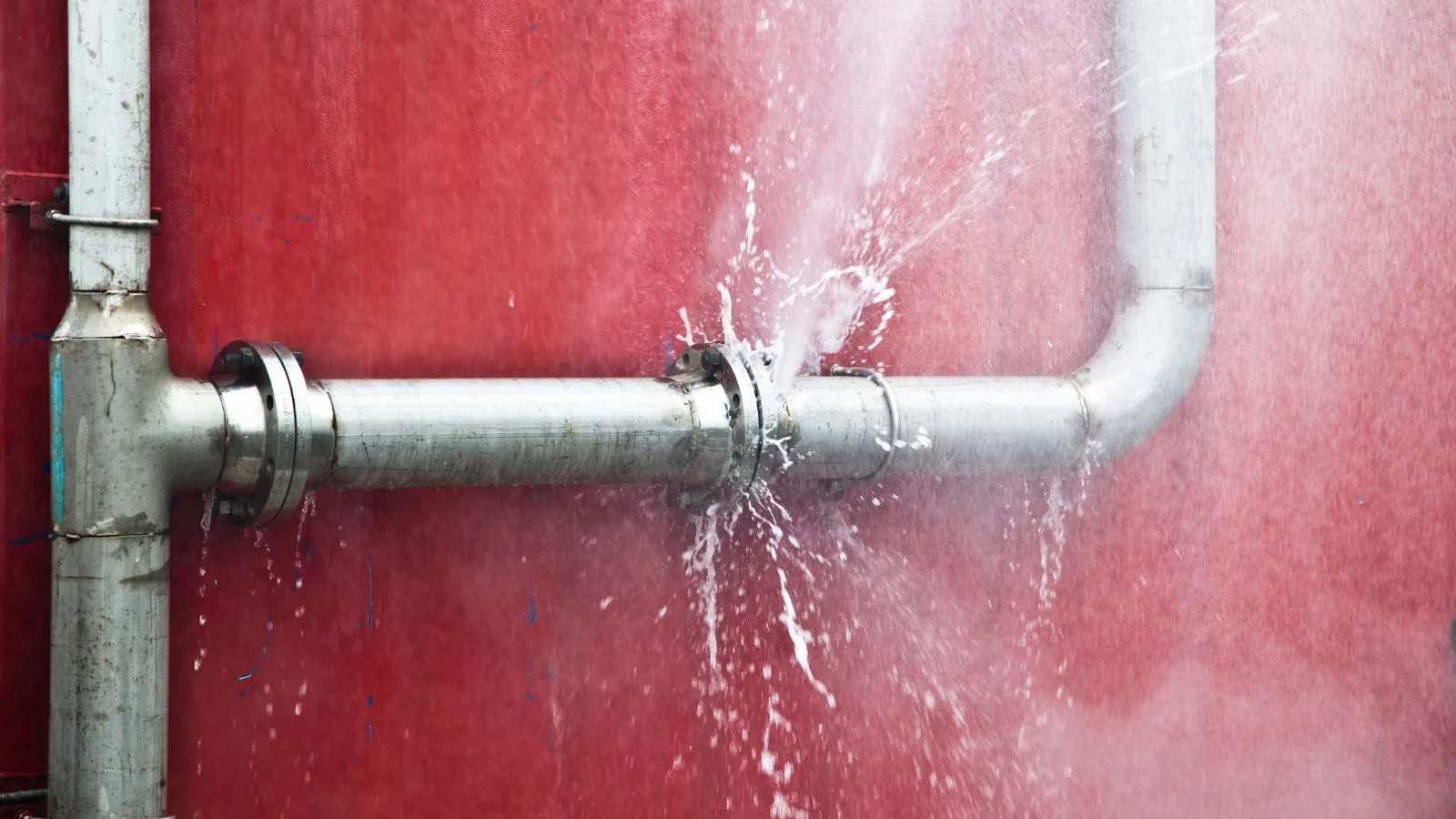
A burst pipe is a pressurized failure, so it moves far more water than a slow drip and it moves it fast. If a pipe is spraying or has let go, shut off the main water valve first, then call the 24/7 line at (833) 521-1033. Keep clear of any water near outlets and stay out of rooms where ceilings are bulging.
Burst pipe water damage is the wetting of floors, walls, ceilings and contents by water from a failed supply line. In Roosevelt the cleanup follows the same sequence every time. Stop the source, remove the water, dry the structure and document everything for the claim.
EmergencyWhat to do in the first minutes
- Shut off the main water valve. Most homes have it where the supply enters, often near the water meter or in a utility area.
- Turn off the water heater if the line that failed feeds it, and open a faucet on the bottom floor to drain the system.
- Turn off power to wet areas only if you can reach the panel on dry ground. Otherwise call the utility or 911 first.
- Move valuables, rugs and electronics out of the water's path.
- Photograph and film the damage before you move or clean anything.
Do not wait for the plumber to arrive before calling about the water. Repair of the pipe and removal of the water are separate jobs, and the water is the part that keeps spreading.
BehaviorWhere burst pipe water goes
Pressurized water does not stay near the break. It runs along joists, down wall cavities and across subfloors, and it can appear in a room far from the pipe.
A break under a kitchen sink can wet the cabinet, the toe kick, the flooring and the wall behind it within an hour. A break in an upstairs wall can drop water into the ceiling below, which is why callers often report a ceiling stain and a wet wall as the same problem.
Under a sink or vanity
Water pools in the cabinet and wicks into the toe kick and the flooring, so both are checked. See kitchen water damage.
Inside a wall
Drywall wicks water upward, so the wet line on the wall is lower than the real damage. See wall and drywall water damage.
Above a ceiling
Insulation holds water and the ceiling may sag before it shows a stain. See ceiling water damage repair.
Whole-house release
A main line failure can put water on every level, so extraction comes before anything else.
Pipe let go? Do not wait.
Shut off the main valve, then call. The 24/7 line is open and a dispatcher will help you sort out what to do next.
How the cleanup runs
Extract
Pumps and wands remove standing water and pull it from carpet and padding.
Map
Moisture meters and thermal imaging show where water traveled behind finishes.
Dry
Air movers and dehumidifiers dry the structure, and wall cavities are opened when needed.
Document
Photos, moisture readings and a scope of work support your insurance claim.
Drying is where most of the time goes. A supply line break can leave framing wet for days after the floor looks fine, and equipment stays until readings return to normal. The process is explained in more detail under structural drying.
DecisionPipe failure and what it means for the repair
| What was wet | Usually done | Often replaced |
|---|---|---|
| Hard flooring (tile, sealed concrete) | Extraction and drying | Rarely anything |
| Carpet and pad | Extraction, drying of carpet if clean | Pad, and carpet if it has delaminated |
| Drywall wet less than a foot | Opened or drilled, dried | Wet insulation and any softened board |
| Drywall wet higher or for days | Flood cut, dried | Affected sheets and baseboard |
| Wood or laminate flooring | Drying mats, monitoring | Boards that cup or buckle |
Burst pipes in Roosevelt and nearby towns
Crews dispatch to Roosevelt along Nassau Road and the Hempstead-Babylon Turnpike and to the nearby towns of Freeport and Oceanside. A pipe failure inside a house looks the same in every town, but the building rules differ.
Freeport is an incorporated village with its own building department, which can be reached at (516) 377-2241. Roosevelt and Oceanside are hamlets in the Town of Hempstead. Ask the building department for your address whether a repair needs a permit, because permit rules vary.
Cost factorsWhat affects the price of burst pipe cleanup
Four things move the number the most. They are how much water was released, which rooms and materials it reached, how many days of drying the readings call for, and how much rebuild is needed after drying.
Insurance may cover a sudden pipe failure. It often does not cover damage that built up over months from a slow leak, so check your policy or ask your insurer, and keep receipts for emergency work. Want your real number for a burst pipe? Call (833) 521-1033 and we will explain scope and price for a burst pipe before work starts.
Common Questions
Do you handle burst pipe emergencies at night or on weekends in Roosevelt?
Yes. The line is open 24 hours a day, every day, including holidays. Shut off the main valve if you can reach it safely and call.
Arrival times depend on your address and crew availability, so we do not quote a fixed window. The dispatcher will tell you what to do while you wait.
Should I call a plumber or a restoration company first?
Both are needed, but the water keeps spreading while you wait for a repair. Stop the source at the main valve, then call about extraction and drying. A plumber repairs the pipe, and restoration deals with the water that already got out.
Will drywall always need to be removed after a burst pipe?
Not always. Drywall wet for a short time can sometimes be dried in place with small access holes. Board that has softened, crumbled or stayed wet for days is usually cut out.
How do I document a burst pipe for my insurance claim?
Take photos and video before cleanup, keep damaged items until your insurer says otherwise, and save receipts. Moisture readings and a written scope from the restoration crew also help.
Does homeowners insurance cover a burst pipe?
Sudden and accidental pipe failure is often covered, and slow leaks often are not. The details depend on your policy, so ask your insurer.