
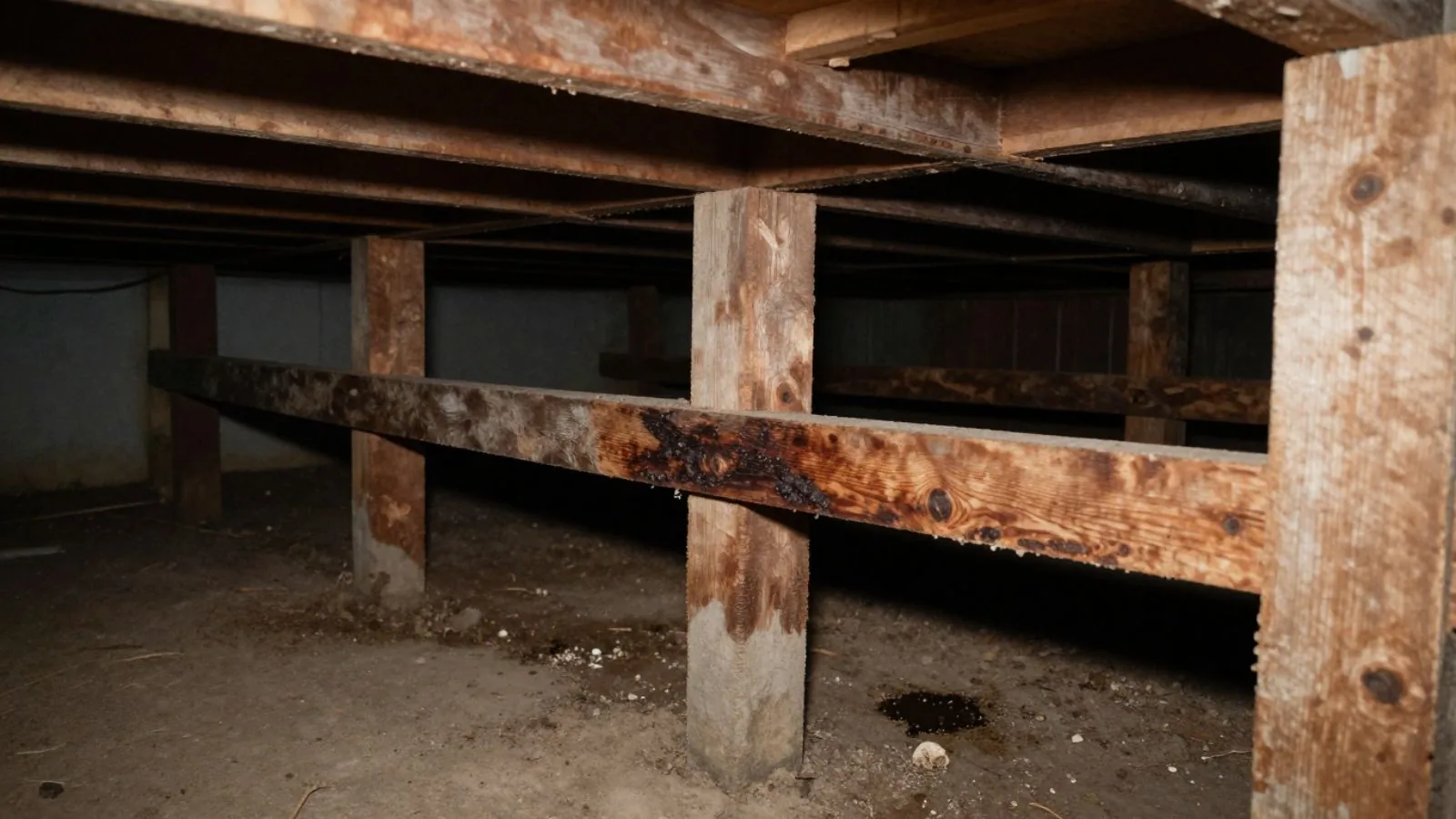
A crawl space is the shallow void between the ground and the floor of a house. When water gets in, it soaks insulation, wets the joists and floor framing and raises humidity in the whole building. If you find standing water, call the 24/7 line at (833) 521-1033 and stay out of any crawl space with water and electrical wiring.
Crawl space water damage is the wetting of the space under a house and the building materials in it. It differs from basement flooding because the space is not meant for living and the problem often goes unseen for months.
BehaviorWhy crawl space water gets overlooked
Nobody looks under the floor often. Callers describe a crawl space with water in it after an irrigation backflow, and others find damp insulation hanging down or a musty smell in the rooms above.
The risk is steady moisture. Wet insulation drops away from the floor, wood stays damp and humid air moves up into the house. Mold is a common follow-on problem, so a quick check matters.
Standing water
Water that sits on the ground or plastic vapor barrier, from rain, a leak or an irrigation issue.
Wet insulation
Fiberglass holds water and falls away from the floor, which lets moisture and cold air reach the framing.
Damp joists and subfloor
Wood that stays wet can grow mold and soften over time.
Musty air in living areas
Humidity from below travels up through gaps and affects the rooms above.
Water under the house?
Call the 24/7 line. We will explain what a safe inspection and drying plan look like.
What the work involves
Inspect safely
The space is checked for standing water, electrical hazards and structural concerns.
Extract
Pumps remove water and wet insulation is taken out.
Dry
Air movers and dehumidifiers dry the framing and the space.
Check for growth
Wood and surfaces are checked for mold, with remediation if needed.
Crawl space work is cramped and sometimes unsafe, so crews use protective gear and set up equipment with care. The drying approach follows the same principles described under structural drying and dehumidification.
CompareCrawl space versus basement and slab
| Your home | Page | Main concern |
|---|---|---|
| Finished or unfinished basement | Basement water damage | Seepage, sump failure, contents |
| Raised floor over a shallow void | This page | Insulation, joists, humidity |
| Concrete slab floor | Slab leak water damage | Supply line leaks beneath the floor |
What to document before cleanup
Crawl spaces are dark and cramped, so evidence is easy to lose once insulation comes out. Take wide photos of the standing water, the wet insulation and any visible staining on joists before anything is moved.
Note the date you first noticed the problem and what happened just before, such as heavy rain, a broken pipe or a sprinkler that ran too long. The cause affects how an insurer treats the claim, and a clear timeline helps the adjuster and the crew.
- Photograph standing water, wet insulation and stained wood.
- Write down when you first saw or smelled the problem.
- Keep any plumbing or irrigation repair receipts.
- Save removed materials only if your insurer asks you to.
Honest limits
Restoration is not waterproofing or encapsulation. If water keeps entering the space, a drainage or crawl space contractor needs to fix the cause. A good restoration company will tell you that rather than keep drying a space that refills.
This page also does not assume that crawl spaces are common in Roosevelt. Housing types vary by street, and the best guide is your own house.
LocalCrawl space water near Roosevelt
For a wet crawl space, our crews serve Roosevelt, Freeport and Oceanside. A property in a mapped flood area has a different risk profile, and you can check yours on the FEMA Flood Map Service Center.
If water entered from outside, the New York Department of Financial Services notes that a typical homeowners policy does not cover flood damage. Ask your insurer which cause applies to your loss.
Cost factorsWhat sets the cost
The cost follows how much water was there, how much insulation and material must come out, whether growth is present, the drying days and the access difficulty. Tight spaces take longer to work in.
Want your real number for a wet crawl space? Call (833) 521-1033 and we will explain scope and price for a wet crawl space before work starts.
Common Questions
Is it safe to go into a crawl space with water in it?
Not without caution. Water can hide wiring, sharp debris and contamination. If you are unsure, stay out and call.
What should I do about wet insulation?
Wet insulation usually needs removal, because it holds water and loses its effect. Take photos first for your insurer.
Will drying a crawl space stop water from returning?
Drying addresses what is wet, not the cause. If water keeps entering, a drainage or waterproofing contractor handles the source.
Do you do crawl space encapsulation?
No. We handle water damage cleanup and drying. Encapsulation is a separate trade.
Does insurance cover crawl space water damage?
It depends on the cause. Sudden pipe failures are often covered, while flooding is usually excluded from a typical homeowners policy. Ask your insurer.