
Floor looks dry but the room still smells damp?
People often search for how to dry out a wet house, whether a dehumidifier is enough or how long wet drywall takes to dry. The answer starts with what you cannot see. A floor can feel dry while the wall cavity, the subfloor or the padding still holds water.
Structural drying is the controlled removal of moisture from a building's materials with air movers, dehumidifiers and monitoring. It is the stage that follows water extraction and comes before repair.
If you have had water in your home and it still smells musty, call the 24/7 line at (833) 521-1033. Drying works best when it starts while materials are still wet.
DefinitionWater mitigation and how drying works
Water mitigation is the work done to stop damage from spreading, including extraction, removal of unsalvageable material and drying. Drying is the longest part of mitigation.
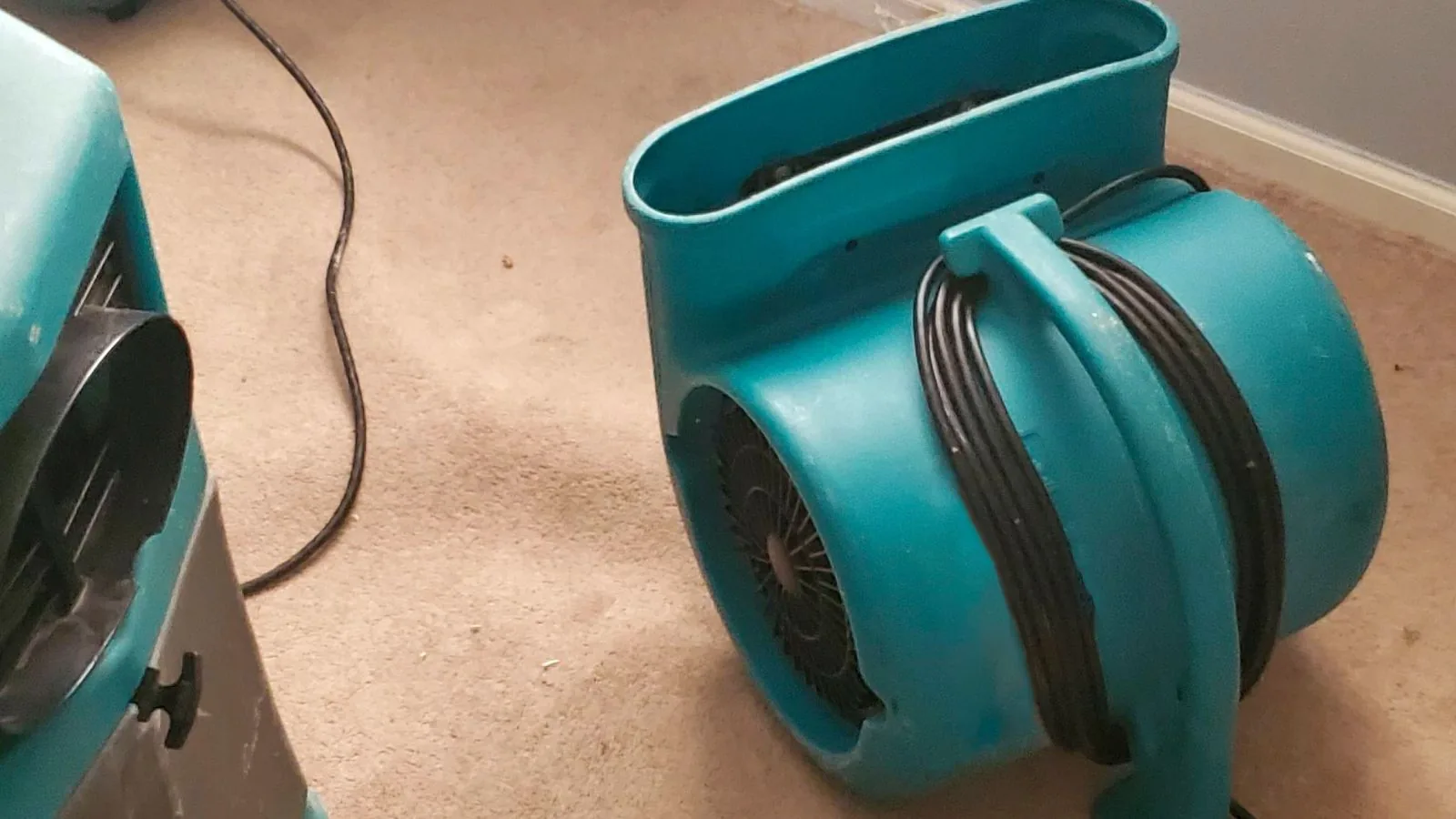
Air movers push dry air across surfaces, and dehumidifiers pull moisture out of the air. Together they dry wood, concrete and drywall until readings match unaffected areas.
Air movers
Direct airflow across floors and walls so surface moisture evaporates.
LGR dehumidifiers
Low grain refrigerant units that pull moisture from the air in typical rooms.
Desiccant dehumidifiers
Used in cooler or tighter spaces where moisture is stubborn.
Moisture meters and thermal imaging
Show where water hides and confirm when materials are dry.
Need to dry a wet building?
Call the 24/7 line. We will explain how moisture mapping and drying readings work.
Moisture mapping: finding the wet material
Mapping means recording moisture readings across floors, walls and ceilings and marking the boundary of the wet area. A thermal camera highlights cool, wet spots, and a meter confirms them.
The map is repeated each day. Drying is working when readings fall toward a reference taken from an unaffected area of the same material.
- Set a dry standardReadings are taken from unaffected materials to define what dry looks like.
- Map the wet areaMeters and thermal imaging mark where moisture has spread.
- Place equipmentAir movers and dehumidifiers are placed to match the room size and the materials.
- Monitor dailyReadings are repeated and equipment is moved or removed as areas dry.
- Confirm and releaseEquipment comes out when readings meet the standard.
How long drying takes
Drying takes days, and the number depends on the materials, the amount of water and the conditions. Thin materials such as carpet dry faster than framing, concrete or hardwood.
Equipment is not rented out or left unattended. It is placed and monitored as part of the job, and it comes out when the readings say the structure is dry.
| Material | Approach | Watch for |
|---|---|---|
| Drywall | Access holes or removal if soft | Water wicking upward |
| Hardwood | Drying mats and slow dehumidification | Cupping, crowning |
| Carpet and pad | Pad removed, carpet dried in place if clean | Delamination, odors |
| Framing and subfloor | Air movers, dehumidifiers | Moisture hidden below the surface |
| Concrete | Dehumidification, longer run times | Slow release of moisture |
Why drying matters for mold
According to the Environmental Protection Agency, wet materials should be dried within 24 to 48 hours to prevent mold growth. When that window passes, wet drywall, carpet and insulation can start to support growth.
Drying cannot reverse growth that has already started. If you see or smell mold, the next step is an assessment, and the work is covered under mold remediation.
LocalDrying in Roosevelt, Freeport and Oceanside
With structural drying, our crews serve Roosevelt along Nassau Road and the Hempstead-Babylon Turnpike and the neighboring towns of Freeport and Oceanside. Drying often follows work described on water extraction and flood damage cleanup.
Equipment needs power. If your electrical service is out after a storm, tell the dispatcher so the plan accounts for it.
SafetySafety during drying
- Keep children and pets away from running equipment.
- Do not unplug or move equipment cords.
- Report any burning smell or tripped breaker to the crew.
- Keep doors and windows closed so dehumidifiers work.
Our drying and cleanup practice follows the ANSI/IICRC S500 standard for water damage restoration.
Cost factorsWhat sets the cost
The cost follows the amount of equipment, the number of drying days, the materials involved and the size of the affected area. A single wet room takes less than a house with water in several rooms.
Want your real number for structural drying? Call (833) 521-1033 and we will explain scope and price for structural drying before work starts.
Common Questions
Can I dry my house with a regular dehumidifier and fans?
They help for light, recent moisture, but they may not reach water inside walls or subfloors. Moisture meters show whether a space is truly dry.
Do you rent air movers and dehumidifiers?
No. Equipment is used on our jobs and is monitored by our crews. We do not rent it out.
How do I know when drying is done?
Readings from the wet area match readings from unaffected material of the same type. Equipment is removed only after that.
Why do air movers run so loud?
They move a lot of air. The noise is part of drying, and the equipment runs until readings are normal.
What does water mitigation mean?
It is the work done to stop water damage from spreading, including extraction, removal and drying. See our water extraction page for the first step.