
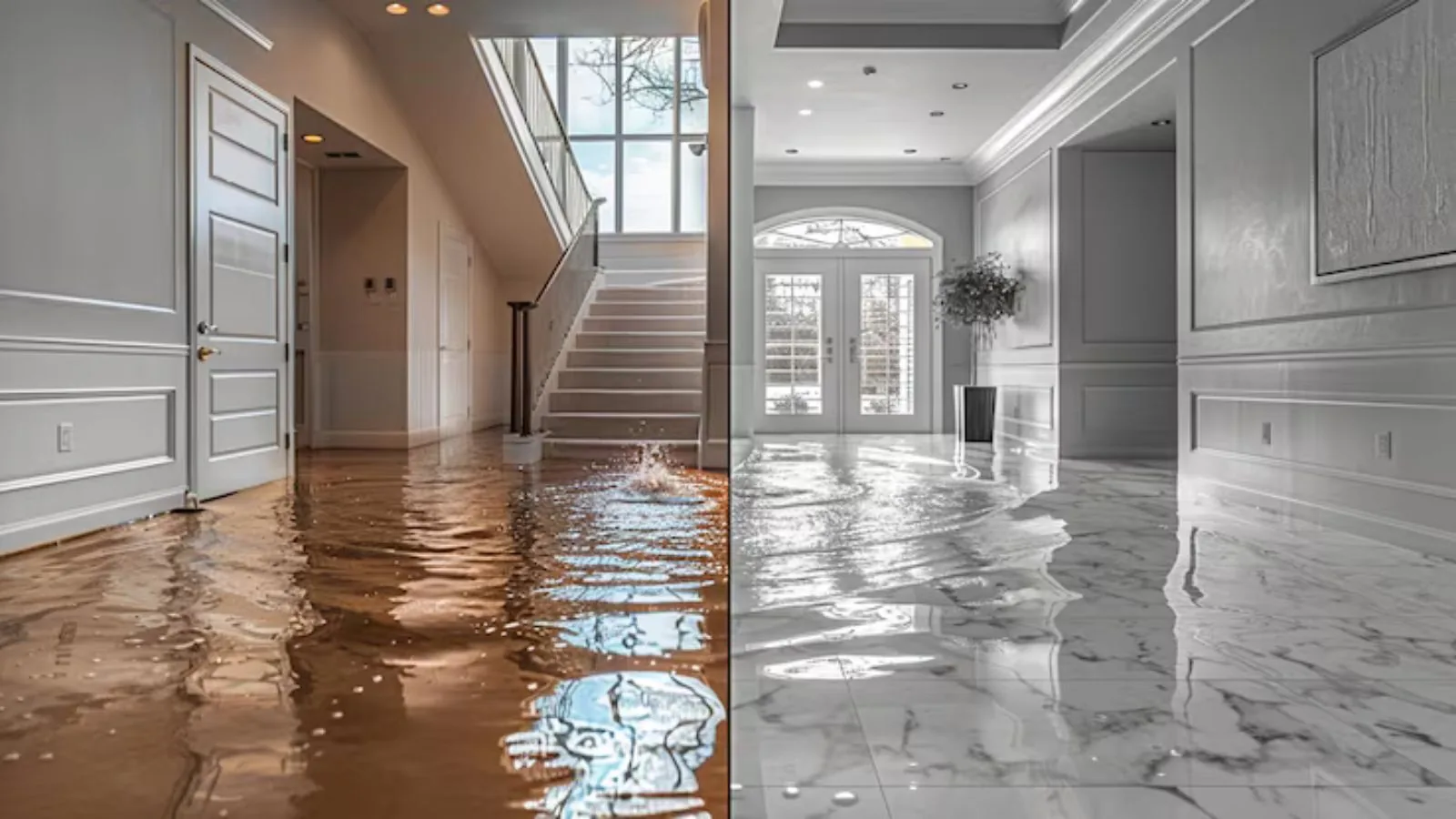
Floodwater is different from a leak because it carries whatever it passed through, and that changes what can be saved. If water is rising or has entered your home, stay out of it, keep people and pets away from it and call the 24/7 line at (833) 521-1033. Do not enter floodwater where electricity may be live.
Flood damage restoration is the removal, cleaning and drying of a building after rising water enters it. Water from outside is treated as Category 2 or 3 under the ANSI/IICRC S500 standard, which means contact is risky and porous materials are often removed.
EmergencyWhen flooding becomes an emergency
Roosevelt is a hamlet in the Town of Hempstead on the South Shore of Long Island, close to Freeport and the canals along the coast. Coastal storms and heavy rain can put water into streets, garages and lower levels.
The National Weather Service impact table for Freeport lists a record tide with three to five feet of inundation south of Merrick Road and Atlantic Avenue. More recent entries include two to three feet on roads south of Atlantic Avenue on December 23, 2022. Those are Freeport figures, not Roosevelt figures, but they show how fast the area can flood when the tide and rain line up.
Floodwater can hide electrical hazards and sharp debris. Do not walk through it to reach a panel. Call the utility or 911 for any electrical or gas danger before you call us.
How flood restoration differs from a leak
| Category | Source | What it means |
|---|---|---|
| Category 1 | Clean supply line, tub overflow | Least risk, often dried in place |
| Category 2 | Dishwasher or washer discharge, some surface runoff | Contains contaminants, porous materials often removed |
| Category 3 | Floodwater, sewage, rising groundwater | Grossly contaminated, strict safety steps apply |
Most flood loss is Category 2 or 3. Carpet, padding, insulation and soft drywall that touched it are usually removed rather than dried, because cleaning cannot make them safe again.
Hard materials such as framing, concrete and many solid floors can be cleaned, sanitized and dried. Which is which is decided room by room.
Water in the house?
Call the 24/7 line. We will explain safe first steps and what the cleanup involves.
The cleanup in order
Extract
Pumps clear standing water, then wands pull it from soft materials.
Remove
Contaminated carpet, pad and soft board are cut out and bagged.
Clean
Surfaces are cleaned and sanitized with appropriate products.
Dry
Air movers and dehumidifiers run until readings are normal.
Cleaning and sanitizing come before drying on contaminated losses, not after. Drying contaminated material in place can trap the problem inside the wall.
Once the structure is dry, rebuild begins. Mold is a risk after any flood, and if growth appears, the work moves to mold remediation.
Flood versus the other water pages
Rising water from outside
This page covers river, groundwater, surface and tidal flooding.
Rain coming through a roof
That is storm water damage, which means wind and rain through the building envelope.
Below-grade rooms
See basement water damage for seepage and sump failures.
Drain backups
See sewage backup cleanup for water that rises from a sewer line.
Flood insurance and your claim
The New York State Department of Financial Services says a typical homeowners or renters policy does not cover flood damage and that flood coverage can come from a separate policy. A policy may cover water backup and sewage damage by endorsement, though it typically excludes backup caused by flood.
Check your policy or ask your insurer. The department also advises documenting your losses before cleaning anything up, saving receipts and filing as soon as possible. Look up your address on the FEMA Flood Map Service Center to see what the mapped flood hazard is.
LocalFlood cleanup around Roosevelt
For flood cleanup, our crews serve Roosevelt along Nassau Road and the Hempstead-Babylon Turnpike, and the nearby towns of Freeport and Oceanside. Oceanside was built over former marsh and the hamlet sits behind Reynolds Channel. Hurricane Sandy flooded its southern portion in 2012.
Ask your city or town building department about permits, because the Village of Freeport and the Town of Hempstead handle them separately.
Cost factorsWhat sets the cost of flood cleanup
The factors are the water category, how deep and how long it stood, the materials that must be removed, the drying days and the rebuild afterward. A few inches of Category 2 water in one room is a very different job from a flooded lower level.
Want your real number for flood cleanup? Call (833) 521-1033 and we will explain scope and price for flood cleanup before work starts.
Common Questions
Do you handle flood emergencies at night or on weekends in Roosevelt?
Yes. The phone line is open 24 hours a day, every day. Floods rarely wait for business hours.
We do not promise an arrival window, because access, depth and crew availability vary. The dispatcher will tell you how to stay safe while you wait.
Can flooded carpet be saved?
Carpet that was soaked by floodwater is usually removed because of contamination, and padding almost always is. Clean supply-line water is the exception.
Does homeowners insurance cover flood damage?
A typical homeowners policy does not cover flood damage. A separate flood policy, such as one through the National Flood Insurance Program, may. Ask your insurer.
How can I check whether my address is in a flood zone?
Use the FEMA Flood Map Service Center and enter your address. Your local building department can also help with map determinations.
Do I need a permit to repair flood damage?
It depends on the work and the municipality. Ask the building department that covers your address, since permit rules vary.