
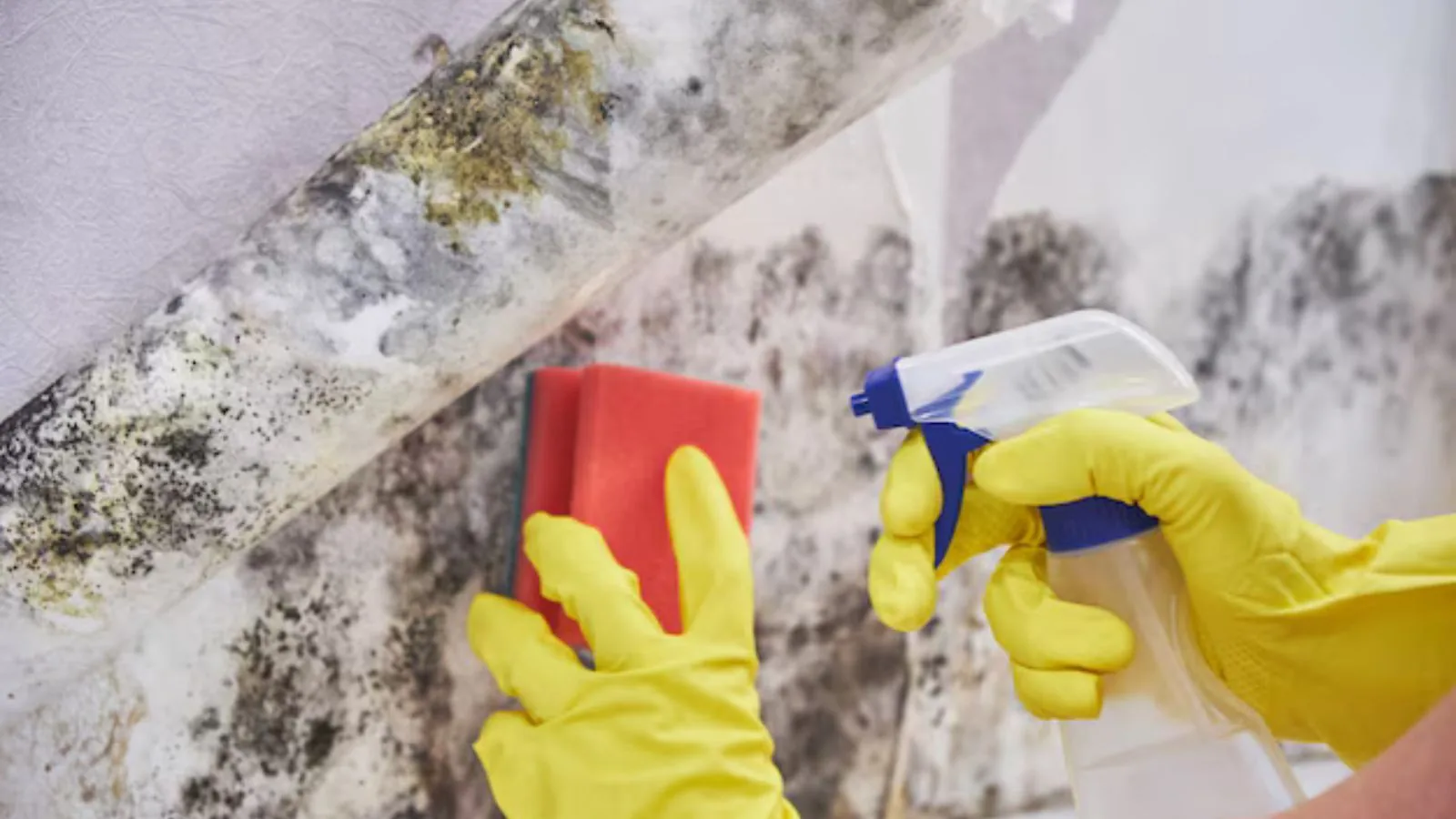
People use the words mold and mildew as if they mean the same thing. They are related, and both are fungi that grow in damp places, but they behave differently and call for different responses. Knowing which you have helps you decide whether to clean it or call for an assessment.
We do not give medical advice. If anyone in your home has health concerns about damp spaces, talk to a doctor.
CompareThe quick comparison
| Feature | Mildew | Mold |
|---|---|---|
| Look | Flat, powdery or downy | Fuzzy, slimy or raised |
| Color | White, gray, pale yellow | Green, black, blue, white or other |
| Where | Surface of damp hard materials | Surface and into porous materials |
| Typical spots | Shower tile, window sills | Drywall, carpet, wood, insulation |
| Usual response | Cleaning and fixing humidity | Assessment if widespread or in porous material |
These are rules of thumb. A lab can identify a sample, and a licensed assessor can tell you what you have and how much.
MildewWhere mildew shows up
Mildew usually grows on the surface of damp, hard materials. Bathroom tile, shower curtains, window sills and damp basement walls are common places. It often wipes off, and it comes back if humidity stays high.
Fixing the humidity matters more than the cleaner. Run a bath fan, keep air moving and fix drips.
MoldWhere mold shows up
Mold often grows into porous materials, such as drywall paper, carpet backing, wood and insulation. It can be hidden behind walls, under floors or above ceiling tiles after a leak.
When mold covers a large area or sits on porous material, cleaning the surface is not enough. Our page on mold remediation explains the assessment and plan that follow.
Small, on tile or glass
Likely mildew or surface growth. Clean with care and fix the humidity.
On drywall or ceiling
Possible mold. Check for a leak and consider an assessment.
On carpet or padding
Likely tied to a water event. Padding often needs replacement.
Behind baseboards
Check for hidden moisture with a meter.
What to do about each
Find the moisture
Look for leaks, condensation and poor ventilation.
Fix the cause
Repair the leak and lower humidity.
Clean small areas
Use a detergent and water on hard surfaces, and wear gloves and a mask.
Call for help on larger areas
If it covers a large area, comes back or sits in porous material, get an assessment.
Do not mix cleaning chemicals. Do not scrub dry growth in a closed room. If the cause was a leak, drying matters more than any cleaner, as explained under structural drying and dehumidification.
HumidityHumidity numbers worth knowing
A simple hygrometer shows indoor humidity. The Environmental Protection Agency suggests keeping indoor humidity below about 60 percent, and lower is better in basements and bathrooms. A reading above that for long periods invites growth on surfaces.
A dehumidifier in the basement and a fan in the bathroom are inexpensive ways to lower the number. Empty the tank often, or use a unit with a hose to a drain.
CleaningCleaning small areas safely
For a small patch of surface growth on tile or glass, use detergent and water, and wipe it off. Wear gloves, eye protection and a mask. Do not mix bleach with ammonia or other cleaners, because the fumes can be dangerous.
Dry the surface afterward. If the patch returns within a few weeks, the moisture source is still there and needs to be found.
Room by roomCommon rooms and what to check
| Room | Common spot | What to check |
|---|---|---|
| Bathroom | Grout, ceiling corners | Fan use, leaks around the tub |
| Kitchen | Under the sink | Supply lines and the trap |
| Basement | Walls and corners | Humidity and water entry |
| Bedroom closet | Outside walls | Condensation and airflow |
| Attic | Roof deck | Roof leaks and venting |
Why cleaners alone do not solve it
Any growth needs moisture. A cleaner removes what you see, but if the source remains, the growth returns. That is why the first step is always to find the water.
If you find the source and it comes from a leak, call a plumber. If water has already soaked the materials, call a restoration company so drying starts right away.
MythsMyths that waste time
One myth is that you can tell a dangerous mold by its color. You cannot. Another is that a coat of paint or a spray fixes it. Paint over growth hides the stain, and the growth often keeps spreading behind it.
A third myth is that a musty smell means nothing. A lasting musty smell usually means moisture is trapped somewhere, and it is worth tracking down.
Damp air on the South Shore
Roosevelt, Freeport and Oceanside sit near the water, and summer humidity is part of life here. Window condensation, steamy bathrooms and closed basements are common places for surface growth.
Groundwater sits closer to the surface near the South Shore than farther north on Long Island, so basements can run damp after heavy rain. A dehumidifier and a hygrometer from a hardware store help you see the problem before it grows.
When to stop and call
- The growth covers more than a small patch.
- It returns soon after cleaning.
- It sits on drywall, carpet or ceiling tile.
- A leak or flood came first.
- A musty smell remains with no visible source.
Common Questions
Is mildew less serious than mold?
It is usually a surface problem on hard materials, while mold can go deeper. Either one points to excess moisture.
Can I tell mold from mildew by color?
Not reliably. Color varies, and only a sample or an assessor can say what you have.
Does bleach kill mold?
Bleach does not fix the moisture and is not a complete answer on porous materials. Remove the moisture first.
Do I need a licence to clean mildew myself?
No. New York licensing covers mold assessment and remediation above a set size. Small household cleanup is a homeowner task.
Why does my Roosevelt basement smell musty?
Damp air and past leaks are common causes. Check for water entry and use a dehumidifier.