
When water is on the floor, you are stressed, and the first company that picks up often gets the job. A few questions take only minutes and tell you a lot about who you are hiring. This guide lists the ones that matter and what good answers sound like.
We are a restoration company and we will answer these ourselves. The goal is for you to know what to expect from any company.
BasicsIs the company licensed and insured?
Ask whether the company is licensed and insured, and ask for proof you can check. In New York, mold assessment and remediation above a set size require a license from the State Department of Labor, and the rules keep assessment and remediation separate.
A company that dodges the question is a poor sign. We are licensed and insured, and we will explain how that applies to your job.
PriceWill you explain scope and price before work starts?
This is the most useful question. A company should explain the scope of work and the price in writing before it begins. Ask what is included, what is extra and how changes are handled.
Be careful about open-ended promises. Water damage depends on what is found as walls open up, so a firm number before anyone has looked is a warning sign.
Scope
What work is included and what is not.
Price
How equipment days, labor and disposal are charged.
Changes
What happens if more damage is found.
Payment
When payment is due and how insurance is handled.
What equipment and documentation will you use?
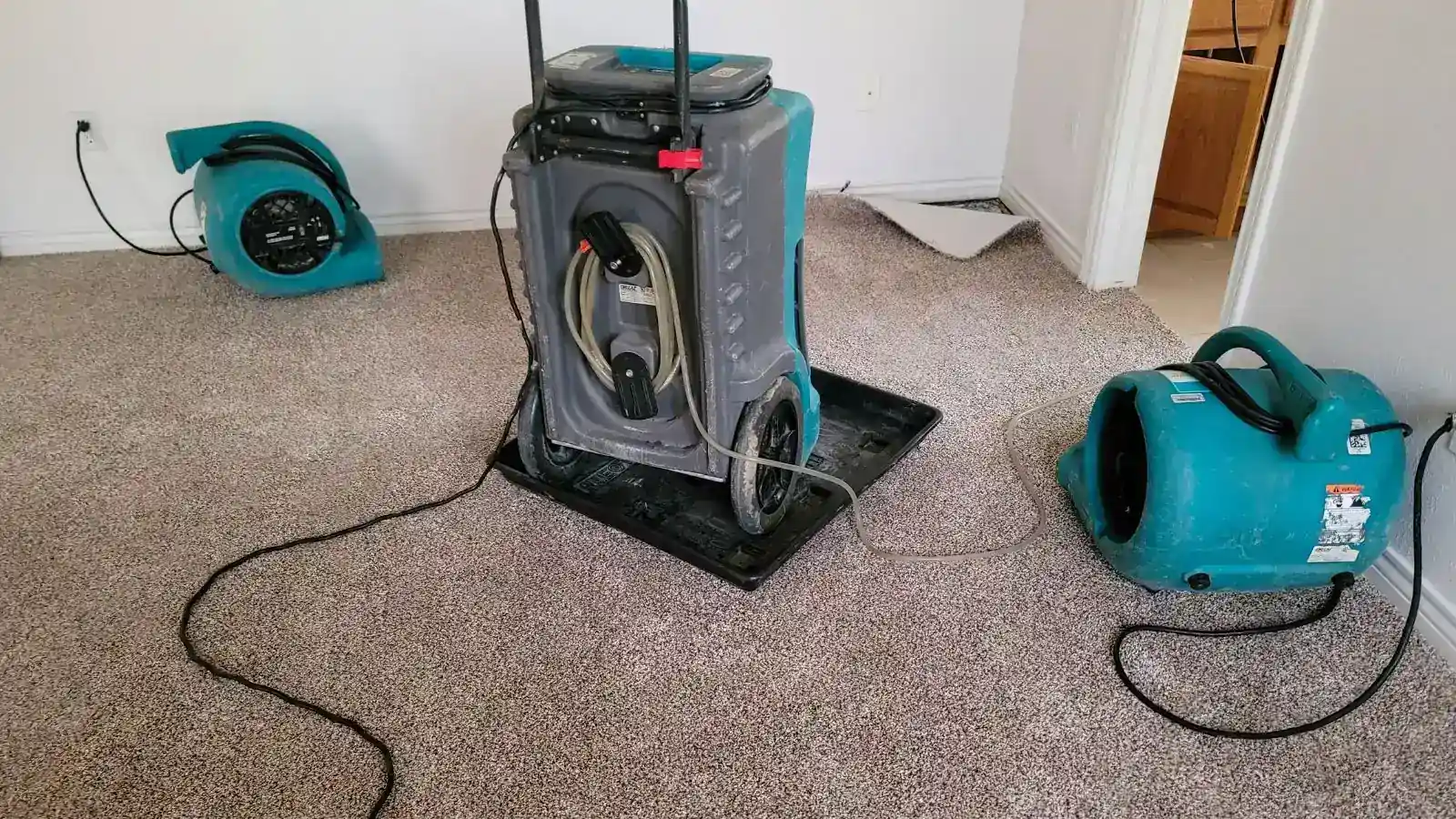
A good company uses moisture meters and records daily readings. It places air movers and dehumidifiers for the room size and moves or removes them as areas dry. It takes photos before, during and after.
Ask to see the readings. Drying is done when materials match a dry reference, not when a calendar says so. Our page on structural drying and dehumidification explains how that works.
| Question | Good answer | Poor answer |
|---|---|---|
| Do you have a licence? | Yes, with details you can check | Dodges or changes the subject |
| How will you price the job? | Scope and price explained in writing first | Quotes by phone with no look at the damage |
| How will you track drying? | Daily moisture readings and photos | Equipment runs for a fixed number of days |
| Who will be on site? | Trained crew members | Unclear or sent off to others |
How do you work with my insurer?
Ask whether the company documents the loss in a way an adjuster can use. Photos, moisture logs and a written scope all help. Ask who deals with the insurer and how payment works.
A company cannot promise what your insurer will pay. If someone says it can, be careful.
CrewQuestions about the crew and the timeline
Ask who will be on site, whether they are employees or subcontractors and how many days of drying you should expect. A company should be able to give a rough range and explain what could change it.
Ask how often the crew will return to read the meters. Daily checks are normal for most jobs, and the readings decide when equipment comes out.
ContentsQuestions about contents and your belongings
Ask how furniture and belongings will be moved, who is responsible for damage during the move and how items will be listed. A clear inventory protects both sides.
If belongings will be taken off site, ask where they will be stored and how you will get them back. Photograph items before they leave.
Wrap-upQuestions after the job ends
- Will I get the drying log and final readings?
- Will the invoice match the written scope?
- Who do I call if a problem shows up later?
- What did you find that I should tell my insurer?
- Are any repairs still needed from other trades?
A professional company is comfortable giving you these records. If a company will not share readings or photos, ask yourself why.
ComparingComparing two estimates fairly
When you get two scopes, line them up by task rather than by total. One company may list air movers, dehumidifiers and monitoring, while another lists only a flat fee. A lower total with fewer line items may leave out steps you will need later.
Ask each company to explain the differences in plain words. A clear explanation is worth more than a small price gap.
Self checkQuestions to ask yourself
- Do I understand what will be done and why?
- Do I have the scope in writing?
- Have I told my insurer?
- Do I know who to call if something goes wrong?
- Do I feel pressured, or informed?
A good hire leaves you feeling informed. If something feels off, take a few minutes to call another company before you sign.
Hiring in the Roosevelt area
Roosevelt is in the Town of Hempstead, with Freeport and Oceanside close by, and storms often create many calls at once. Ask any company how it handles a busy night and whether the phone line is staffed around the clock.
We do not promise an arrival time, and you should be wary of any company that does without knowing the roads and the weather. Our line is open 24/7, and the dispatcher explains next steps.
Red flags to watch for
- Pressure to sign before anyone has seen the damage.
- Claims about response times that cannot be backed up.
- Offers that sound too good to be true.
- Refusal to put scope and price in writing.
- Door-to-door solicitation after a storm.
- No clear answer about licences or insurance.
If you are unsure, call more than one company and compare their answers. Our page on flood damage restoration explains how large jobs are planned.
Common Questions
Should I get more than one quote for water damage?
If the situation allows, yes. Water damage should be dried quickly, so do not wait long, but a short comparison helps.
Do I have to use the company my insurer recommends?
Generally you may choose your own contractor, though programs differ. Ask your insurer about its rules.
What documents should I ask for?
Photos, daily moisture readings, a written scope and an invoice that matches the work.
Can a company promise what insurance will pay?
No. Only your insurer decides what is covered.
What should a Roosevelt homeowner check about response?
Ask whether the line is staffed 24/7 and how the dispatcher explains next steps. Be wary of promises about arrival times.