
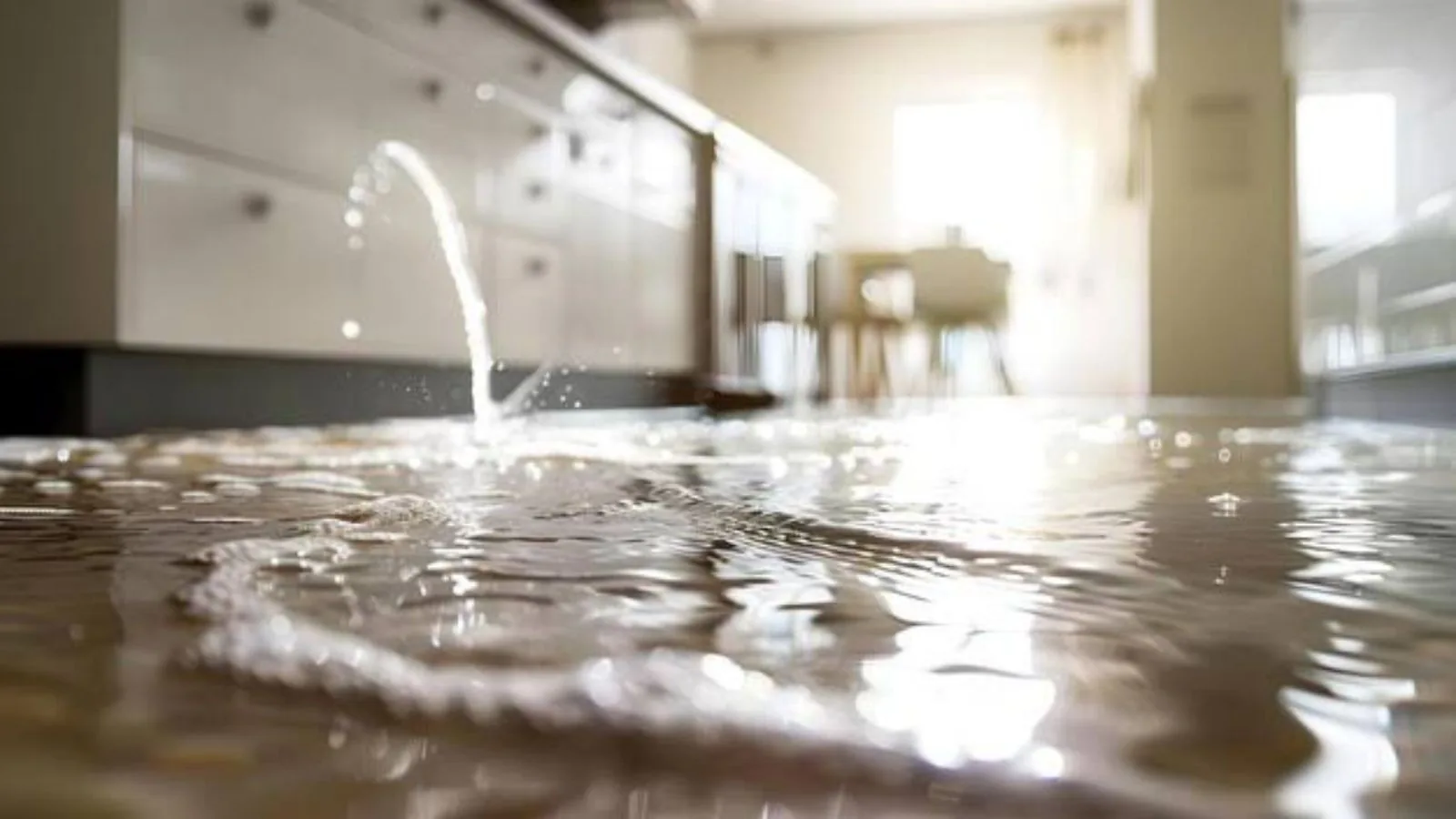
When an insurer or a restoration company says you need water mitigation, they mean the work done right away to stop the damage from getting worse. It is not the rebuild. It is the emergency stage that comes first, and it often decides how big the rebuild will be.
This guide defines the term, lists the steps and explains how mitigation differs from restoration and remediation.
DefinitionThe short definition
Water mitigation is the set of actions that limit damage after a water loss. It includes stopping or isolating the source, removing standing water, taking out materials that cannot be saved and drying the structure. The word mitigate means to lessen, and that is the goal.
Stop the source
Close the valve, turn off the appliance or have a plumber isolate the pipe.
Remove the water
Pumps and extractors pull out standing water.
Remove unsalvageable material
Soaked padding, insulation or soft drywall may be cut out.
Dry the structure
Air movers and dehumidifiers dry what remains.
Why mitigation comes first
Water keeps working after the leak stops. It wicks up drywall, soaks into subfloors and raises humidity in the whole building. The Environmental Protection Agency advises drying wet materials within 24 to 48 hours to help prevent mold growth.
Mitigation is also usually a duty under your insurance policy. Most policies expect you to take reasonable steps to prevent further damage, and delay can reduce what is paid.
ProcessA typical mitigation sequence
Assess
The source, the water type and the area affected are identified.
Extract
Water is pumped or extracted from floors and low spaces.
Remove
Materials that cannot be dried are removed and bagged.
Dry
Equipment is placed and moisture readings are taken each day.
Document
Photos and readings are recorded for your insurer.
The drying stage is the longest. Our page on structural drying and dehumidification explains how moisture mapping and equipment work together.
Related termsMitigation, restoration and remediation
| Term | What it means | When it happens |
|---|---|---|
| Mitigation | Stop and limit the damage | Right away |
| Restoration | Repair the building to its prior condition | After drying |
| Remediation | Remove a contaminant such as mold | When growth is present |
People use these words loosely, and companies are not consistent. Ask what is included in each phase before you agree to a scope.
LimitsWhat mitigation does not include
Mitigation does not rebuild the kitchen or replace flooring. It does not fix the plumbing leak, which is a plumber's job. It also does not waterproof a basement.
A mitigation invoice will list equipment, labor and removal. A repair invoice will follow separately for materials and finishing.
CostsWhat a mitigation invoice looks like
A mitigation invoice usually lists labor, equipment days and disposal. Equipment is charged per day, so the number of drying days matters. Moisture readings in the job file justify when equipment came out.
Ask for the daily readings and photos. They show whether drying worked and give your insurer a record. A clear invoice with matching documents is a sign of an organized job.
Property typesMitigation in a house versus a business
In a house, mitigation is often one or two floors and a few rooms. In a shop or office, floor areas are larger, tenants share walls and downtime costs money. The steps are the same, but the planning differs.
For commercial properties, see our commercial water damage restoration page. Tell the dispatcher the building type so the right crew and equipment are planned.
Before you signQuestions to ask about a mitigation scope
- What equipment will be placed and for how many days?
- How will moisture readings be recorded and shared?
- Which materials will be removed, and why?
- Who handles contents and furniture?
- What is the price for each part, explained before work starts?
A clear answer to each of these questions is a good sign. Vague answers or pressure to sign before anyone has looked at the damage are reasons to slow down.
Finish lineWhen mitigation ends
Mitigation ends when readings show the structure is dry and the equipment is removed. Repairs then begin, and your insurer will usually want the drying log before it approves them.
Keep the log, the photos and the invoice together. Our blog guide on questions to ask a water damage company explains how to judge the paperwork.
Mitigation on the South Shore
Roosevelt sits in the Town of Hempstead on the South Shore of Nassau County, with Freeport and Oceanside nearby. Heavy rain, storm surge and older plumbing all lead to water losses, and mitigation steps look the same wherever the water comes from.
Groundwater lies closer to the surface near the South Shore than farther north on Long Island, which is one reason basements here can take on water after heavy rain. Mitigation removes the water, and a drainage contractor handles the cause.
What you can do before the crew arrives
- Shut off the water at the main valve if the source is a pipe.
- Turn off power to wet areas if you can reach the panel safely.
- Lift small items and papers off wet floors.
- Photograph the damage and the source.
- Call a restoration company and your insurer.
If the water came up from the ground floor of a house, our page on basement water damage cleanup covers the added steps.
Common Questions
Is water mitigation the same as water damage restoration?
No. Mitigation stops and limits the damage. Restoration repairs the building afterward.
How long does mitigation take?
Extraction takes hours, while drying usually takes several days. The time depends on the materials and the amount of water.
Does my insurance pay for mitigation?
Often yes for covered losses. Your policy may also require you to start mitigation promptly.
Do I need mitigation if the water seems small?
Often yes. Small amounts of water can wet walls and subfloors where you cannot see it.
Who handles mitigation in Roosevelt, NY?
A water damage restoration company that offers a 24/7 phone line. Call as soon as you find water.